
すみません
Manners · 2026-10-15 · View on X
Japanese Manners | すみません
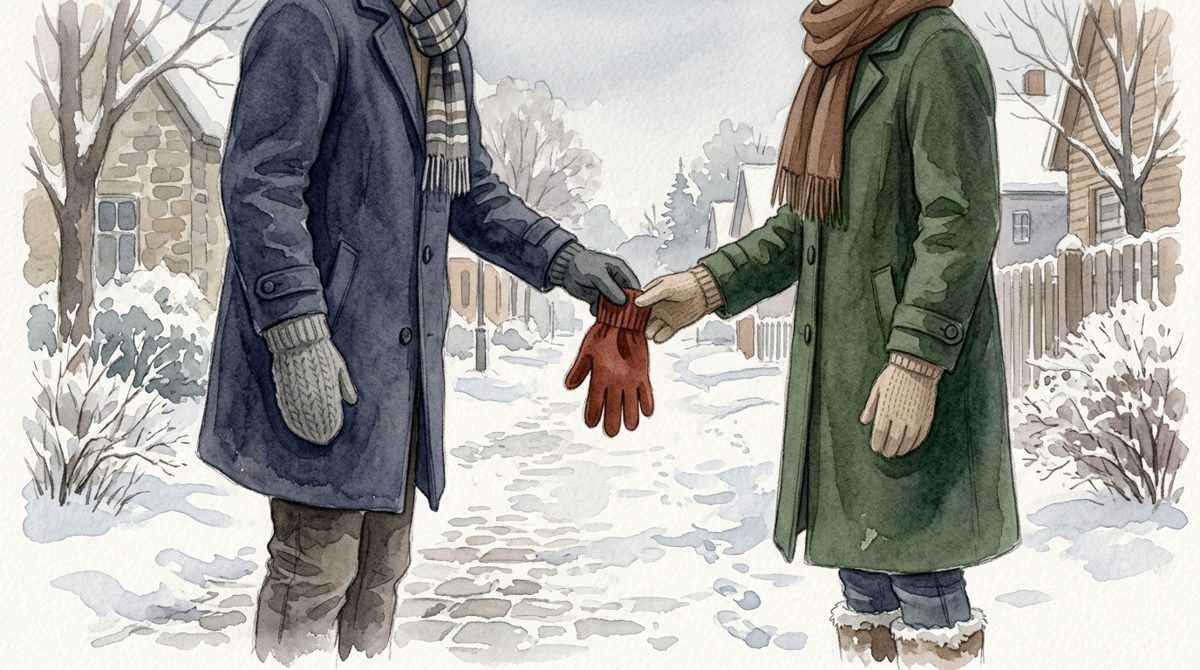
Someone in Japan hands back the glove you dropped, and you say "sumimasen." It sounds like an apology. You meant thank you.
Sumimasen (すみません) does mean "I'm sorry," but it also carries "I've put you to trouble." It comes from sumanai, "not settled." The feeling is that words alone cannot settle what was done for you.
So the thanks comes with a small apology for the effort the other person made. The same word also calls over a waiter and says sorry, which is why it confuses so many visitors.
In Japan, many of us say it several times a day without deciding which of the three we mean.
日本語訳
【日本の礼儀・習慣】すみません
日本で、落とした手袋を誰かが拾って渡してくれたとき、「すみません」と言います。謝っているように聞こえます。でも、伝えたいのは「ありがとう」です。
すみませんは「申し訳ない」という意味ですが、「お手数をかけてしまった」という気持ちも含んでいます。語源は「済まない(片づかない)」。してもらったことは、言葉だけでは済まない、という感覚です。
だから感謝は、相手にかけた手間への小さなおわびと一緒に伝わります。同じ言葉で店員さんを呼び、謝りもします。多くの外国の人が混乱するのは、そのためです。
日本では、多くの人が、3つのどれのつもりかを決めないまま、1日に何度もこの言葉を口にしています。