
豚骨・白湯 (tonkotsu)
Food · 2026-10-18 · View on X
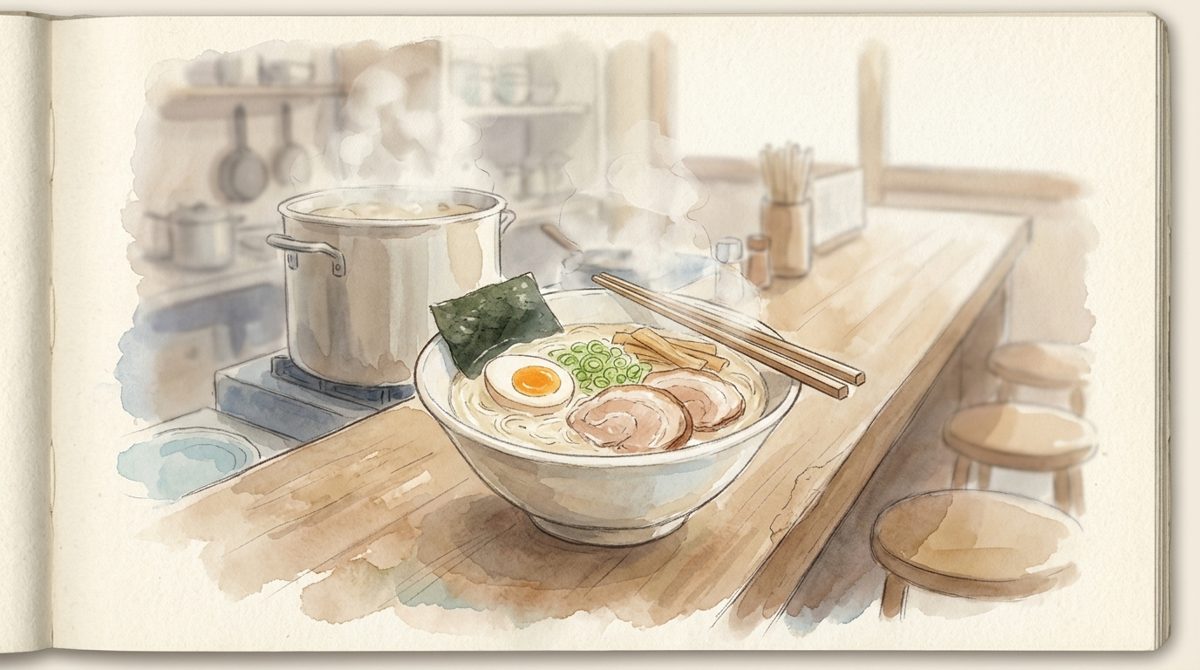
Ramen | 豚骨・白湯 (tonkotsu)
A bowl of Hakata ramen arrives, and the soup looks almost like milk. There is no milk in it.
The word is tonkotsu, which simply means "pork bone."
For a clear stock, you keep the pot at a quiet simmer. Tonkotsu does the opposite. Pork bones, such as thigh bones and feet, are kept at a hard boil, for what is said to be ten-plus hours.
That rough boil pulls marrow, collagen and fat out of the bones and mixes them into the water. That is to say, the white is an emulsion, made by heat and time.
The style is said to have started around Hakata in Fukuoka and the wider Kyushu area. In Japan, many of us read that cloudy color as a sign that someone kept the fire going all day.
日本語訳
【ラーメン】豚骨・白湯 (tonkotsu)
博多ラーメンが運ばれてくると、スープはほとんど牛乳のように見えます。牛乳は入っていません。
言葉は tonkotsu(豚骨)。そのまま「豚の骨」という意味です。
澄んだ出汁をとるときは、鍋を静かに煮立たせます。豚骨はその逆です。大腿骨や足などの豚の骨を、十数時間とされるあいだ、強く沸かし続けます。
その激しい沸騰が、骨から髄・コラーゲン・脂を引き出し、湯に混ぜ込みます。つまり、あの白さは乳化で、火と時間が作ったものということです。
このスタイルは、福岡の博多を中心とする九州で始まったとされます。日本では、私たちの多くが、あの濁った色を「誰かが一日じゅう火を絶やさなかった」しるしとして受け取ります。