
法隆寺 (Horyu-ji)/檜 (hinoki)
Places · 2026-10-23 · View on X
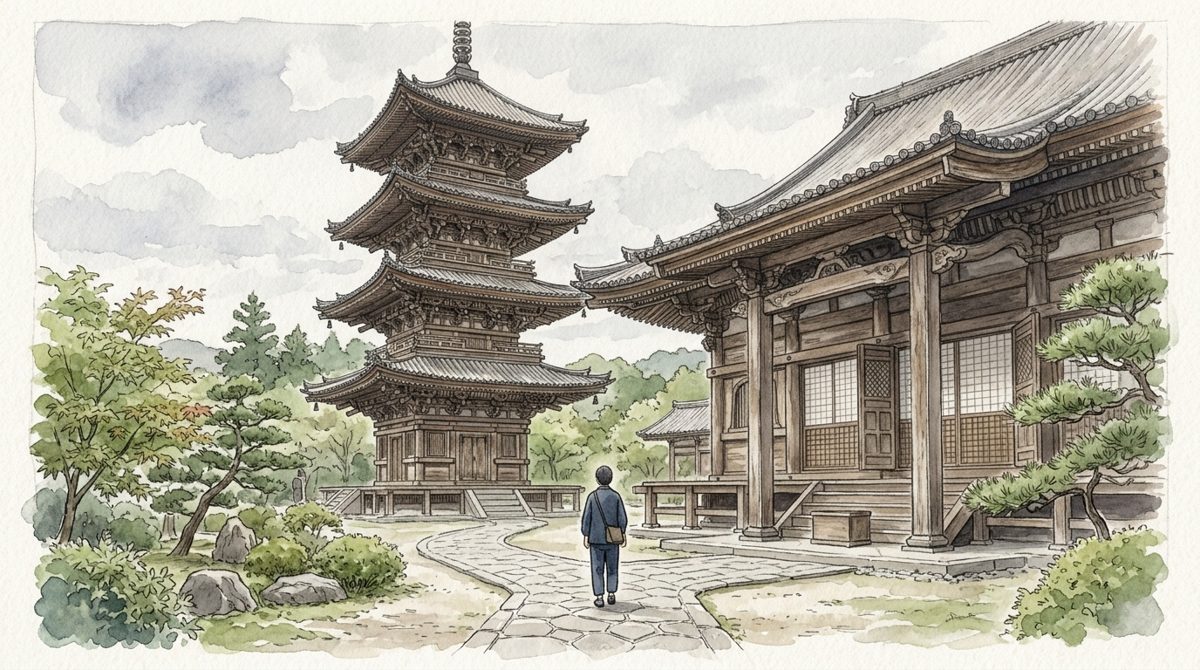
You stand at Horyu-ji in Nara, and the wooden buildings in front of you are more than 1,300 years old. How does wood last that long?
Hinoki (檜) — Japanese cypress.
Work on Horyu-ji began in the early seventh century. Studies of when its timber was felled show the buildings are at least 1,300 years old. In 1993, the Buddhist monuments in the Horyu-ji area became Japan's first World Cultural Heritage site.
The wood is hinoki, a strong timber. It is said that wood keeps gaining strength for 100 to 200 years after it is cut, then changes little for about a thousand years.
In Japan, we sometimes speak of wood as something that keeps living after it is cut. Horyu-ji makes that sound less like a figure of speech.
日本語訳
【日本の名所】法隆寺 (Horyu-ji)/檜 (hinoki)
木造の建物が1300年以上も立ち続けている。信じがたい話ですが、法隆寺はそれを実際にやってのけています。
檜(ひのき)。日本のヒノキです。
法隆寺の創建は7世紀の初めに始まりました。建材がいつ伐られたかを調べた結果、建物は少なくとも1300年以上前のものだとわかっています。1993年、「法隆寺地域の仏教建造物」は日本で初めての世界文化遺産になりました。
使われている木は檜で、強い木材です。木材は伐ったあと100〜200年かけて強さを増し、その後1000年ほどはあまり変わらないとも言われます。
日本では、伐ったあとの木も生き続けている、という言い方をすることがあります。法隆寺を前にすると、それがただのたとえには聞こえなくなります。