
ご縁 (goen)/お賽銭 (osaisen)
Manners · 2026-10-23 · View on X
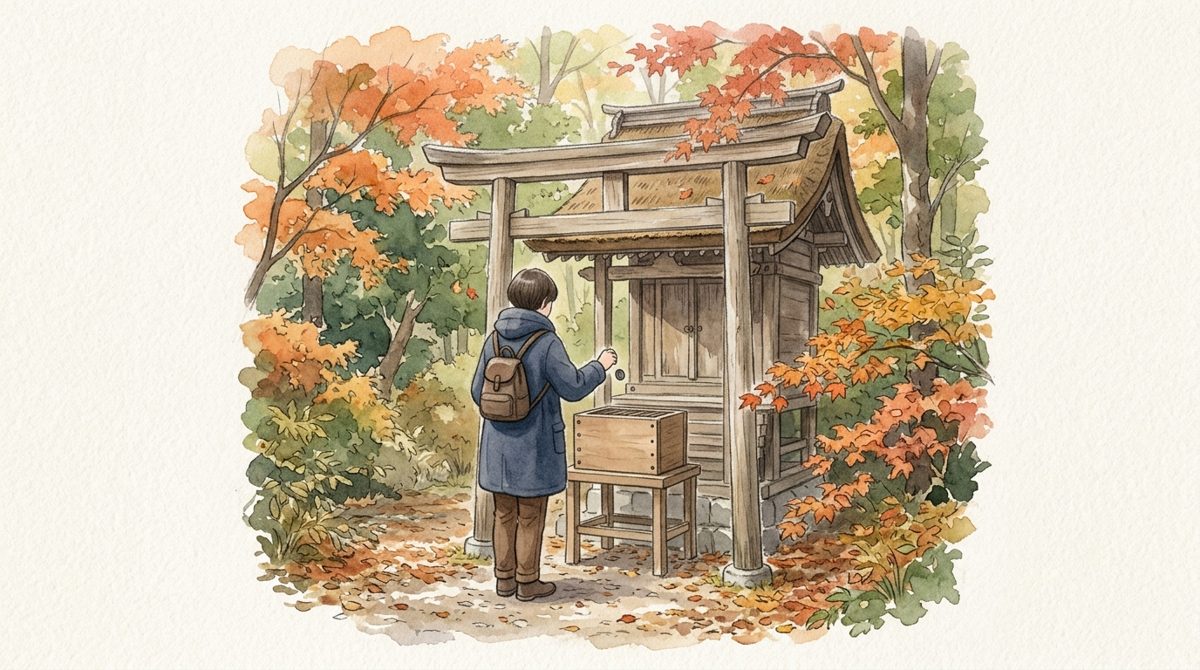
Visitors at Japanese shrines often notice people dropping the same coin into the offering box: a 5-yen coin. Why that one?
Goen (ご縁) — a bond or connection. Osaisen (お賽銭) is the offering itself.
Five yen is read "go-en," which sounds the same as goen. So the coin is seen as a lucky one for tying good bonds.
Offerings were not always coins. People once scattered rice, or wrapped rice in white paper. The offering is said to express thanks to the gods and to clear away the impurities we gather. Many people still pick their amount by wordplay.
In Japan, many of us look for a 5-yen coin in our wallets before a shrine visit, almost without thinking.
日本語訳
【日本の礼儀・習慣】ご縁 (goen)/お賽銭 (osaisen)
日本の神社では、人がお賽銭箱の前に進み、硬貨を入れます。それがよく五円玉です。なぜ五円なのでしょうか。
ご縁。人と人、人と物事とのつながりのことです。お賽銭は、そのとき供えるお金のことです。
五円は「ごえん」と読み、「ご縁」と同じ音になります。そこで、よい縁を結ぶ縁起のよい硬貨とされています。
お供えは、もとから硬貨だったわけではありません。昔は米をまいたり、米を白い紙に包んだりして供えていました。お賽銭には、神さまへの感謝を表す意味と、たまった穢れを祓う意味があるとされます。今も語呂合わせで金額を決める人は多くいます。
日本では、神社に行く前に、ほとんど無意識に財布の中の五円玉を探す人が多いと思います。