
居眠り
Manners · 2026-10-23 · View on X
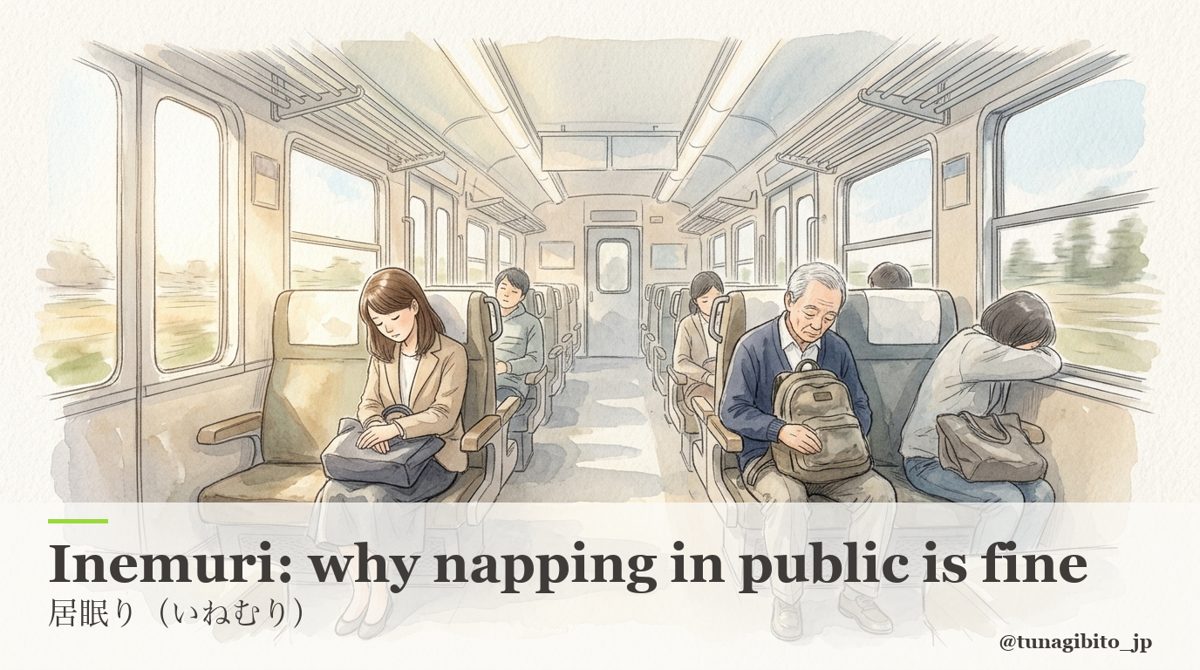
Visitors to Japan often notice people asleep on the train, heads tilted, bags held close. Nobody seems to mind.
Inemuri (居眠り) — usually translated as "dozing," though it is often explained as sleeping while still being present.
English-language guides say the habit goes back at least 1,000 years. Two reasons come up. Many people sleep little; a 2015 government survey found 39.5% of adults slept under six hours a day. And public places are safe enough to close your eyes.
There is an unspoken rule, too. Sleep compactly, and take up no extra space.
In Japan, many of us see a sleeping stranger as someone resting between one place and the next.
日本語訳
【日本の礼儀・習慣】居眠り
日本を訪れた人がよく気づくのは、電車の中で、首を傾け、かばんを抱えて眠っている人の姿です。誰も気にしていないように見えます。
居眠り(inemuri)。多くは「うたた寝」と訳されますが、「その場にいながら眠ること」と説明されることもあります。
英語圏の解説では、この習慣は少なくとも1000年前からあるとされます。理由として挙げられるのは2つです。睡眠が短い人が多いこと。2015年の政府調査では、成人の39.5%が1日6時間未満でした。そして、公共の場所が目を閉じても大丈夫なほど安全なことです。
暗黙のルールもあります。コンパクトに眠り、余計な場所を取らないことです。
日本では、眠っている見知らぬ人を、どこかへ向かう途中でひと休みしている人として見る人が多いと思います。