
もったいない
Culture · 2026-10-24 · View on X
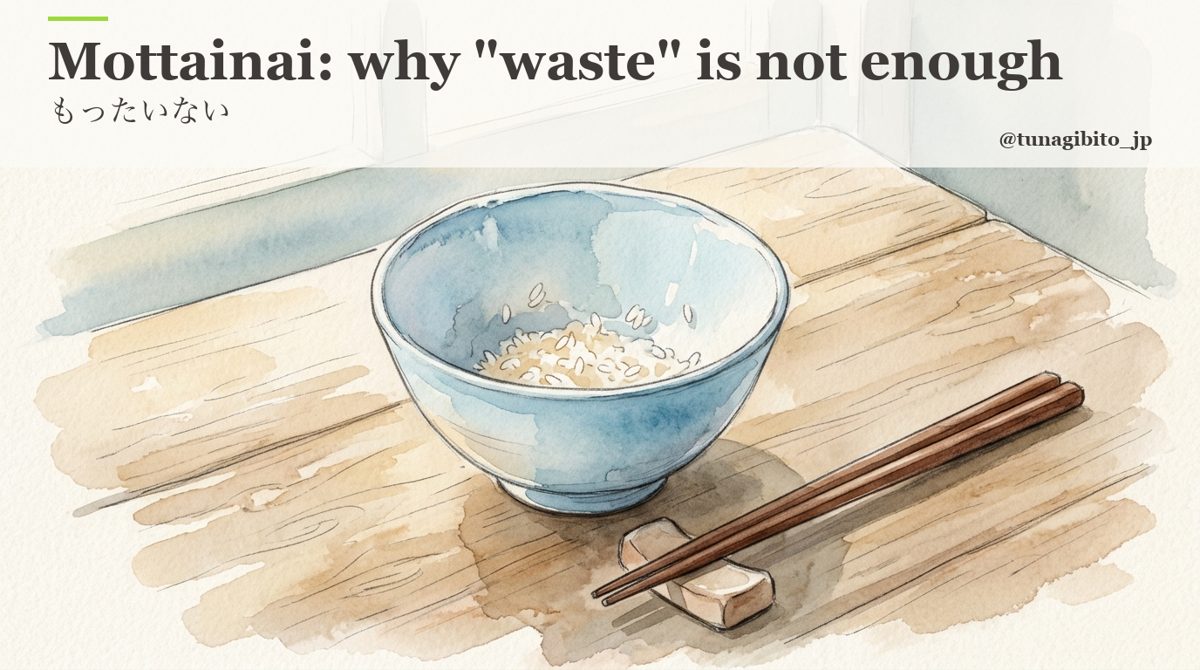
Have you ever thrown away half a meal and felt a small pang you could not name?
Mottainai (もったいない) — often translated as "What a waste!"
The word joins mottai, the true weight or dignity of a thing, with nai, "without." An old dictionary is said to record it in the 13th century.
It can carry regret over something wasted. It can also mean "this is too fine for me," when you are given more than you feel you deserve. One English word cannot hold both.
Its roots are usually linked to Buddhist ideas of thrift and caring for things. Some say the Shinto view that even objects have a spirit shaped it as well.
In Japan, many of us say it over a few grains of rice left in the bowl.
日本語訳
【日本のことば】もったいない
食事を半分捨てたとき、名前のつけられない小さな胸の痛みを感じたことはありませんか。
もったいない(mottainai)。英語では「What a waste!(なんて無駄な)」とよく訳されます。
この言葉は、物の本来の重みや品格を表す「勿体」と、「ない」からできています。古い辞書に、13世紀の用例があるとされます。
無駄にしたことを惜しむ気持ちを表すこともあれば、自分にふさわしい以上のものをもらったとき、「自分にはもったいない」という意味にもなります。英語のひとことでは、両方を抱えきれません。
起源は多くの場合、仏教の倹約や物を大切にする考えに結びつけて説明されます。物にも魂が宿るという神道の見方が影響した、という説もあります。
日本では、お茶碗に残った数粒のご飯を前に、この言葉を口にする人が多いと思います。