
積ん読
Culture · 2026-10-25 · View on X
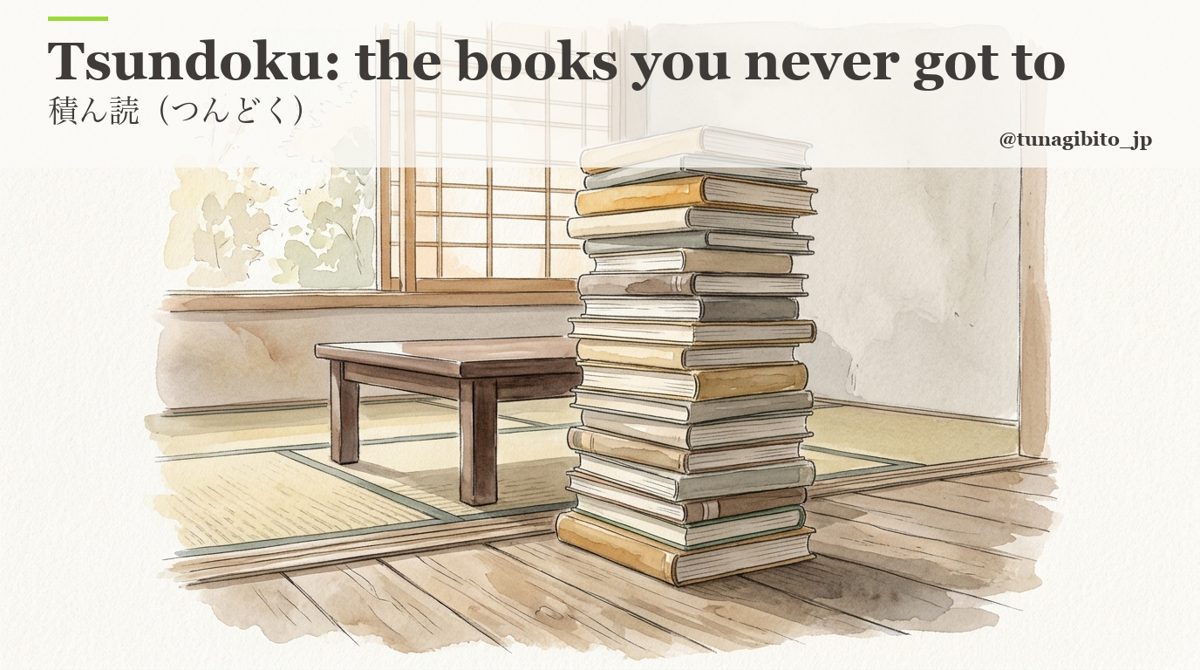
Is there a stack of books at home that you fully meant to read?
Tsundoku (積ん読) — buying books and letting them pile up unread. The word joins tsunde oku, "to stack and leave," with dokusho, "reading." Its written form combines the characters for "stack" and "read."
It began as Meiji-era slang. The oldest known use is said to appear in a satirical piece from 1879, about a teacher whose shelves were lined with books he never read.
So yes, it is a real word, and it has been around for well over a century. In Japan, many of us say it with a small laugh, glancing at our own pile.
日本語訳
【日本のことば】積ん読
家に、ちゃんと読むつもりだった本の山はありませんか。
積ん読(tsundoku)——本を買って、読まないまま積んでおくこと。「積んでおく」と「読書」が合わさった言葉です。文字は「積む」と「読む」を組み合わせています。
明治時代の俗語として生まれました。最も古い使用例は1879年の風刺的な文章とされ、読まない本を棚いっぱいに並べた教師が出てきます。
ですから、これは本当にある言葉で、もう100年以上使われています。日本では多くの人が、自分の本の山をちらりと見ながら、少し笑ってこの言葉を口にします。