
仕方がない/しょうがない
Culture · 2026-10-25 · View on X
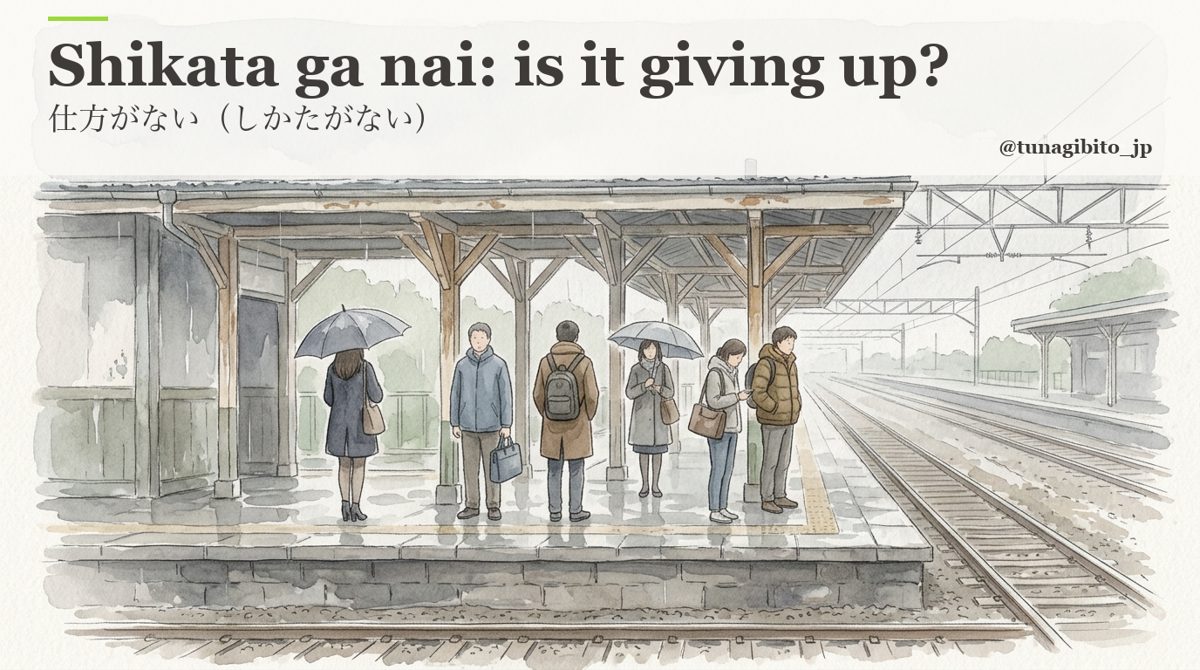
Japanese Words | 仕方がない/しょうがない
You stand at a train platform and hear the announcement that your train is cancelled. The man next to you sighs and says, "Shikata ga nai."
Shikata ga nai means "there is no way to do it." In casual talk, people say shoganai. It is often compared to "it can't be helped" or "it is what it is."
It can sound like giving up. But after something heavy happens, people also use it to draw a line under their feelings and take the next step.
The same words can turn strong, too. "Aitakute shikata ga nai" means "I miss you so much I can hardly bear it." In Japan, many of us say shoganai quietly, and then get back to what needs doing.
日本語訳
【日本のことば】仕方がない/しょうがない
あなたは駅のホームに立っていて、乗るはずの電車が運休になったという放送を聞きます。隣の男性がため息をついて「仕方がない」と言います。
「仕方がない」は「やり方がない」という意味です。砕けた会話では「しょうがない」と言います。英語の「it can't be helped」や「it is what it is」によく例えられます。
あきらめの言葉に聞こえるかもしれません。けれど、重い出来事のあとに、気持ちの区切りをつけて次の一歩を踏み出すために使われることもあります。
同じ言葉が、強い気持ちを表すこともあります。「会いたくて仕方がない」は「会いたくてたまらない」という意味です。日本では、多くの人が「しょうがない」と静かに言い、それからやるべきことに戻っていきます。