
生きがい
Culture · 2026-10-26 · View on X
Japanese Words | 生きがい
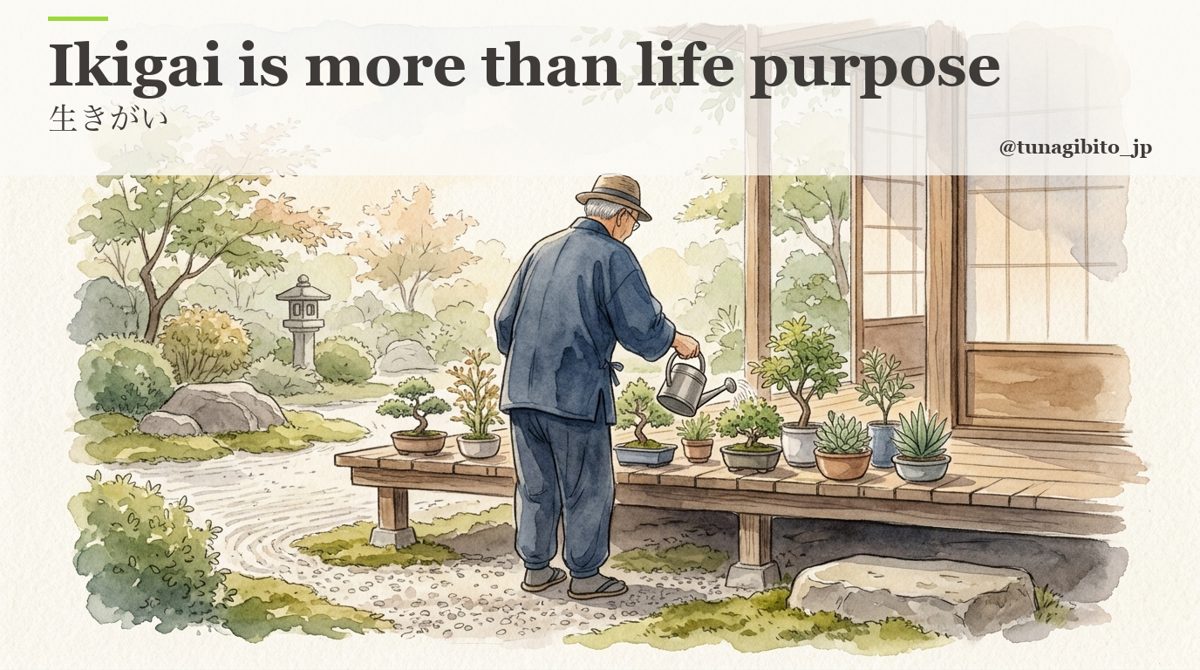
You stand in a small garden at seven in the morning, watching someone water the same row of potted plants they water every day.
Japanese has a word for this kind of thing. It is ikigai (生きがい), roughly "what makes life worth living." Iki means living. Gai means worth or value.
People often translate it as "life purpose," but that makes it narrower. A big goal can be ikigai. So can a morning habit or a small pleasure. One explanation traces the word to the Heian period and links gai to shellfish, once precious. That is one theory among several. A psychiatrist's 1966 book helped spread the word.
In Japan, many of us use it quietly, for things we would never call a purpose.
日本語訳
【日本のことば】生きがい
朝7時、小さな庭に立って、毎日同じ鉢植えの列に水をやる人を眺めている。
日本語には、こういうことを指す言葉があります。生きがい(ikigai)、おおよそ「生きる値打ちを感じさせるもの」。「生き」は生きること。「がい」は値打ち、価値の意味です。
よく「人生の目的」と訳されますが、それでは狭くなります。大きな目標も生きがいになります。朝の習慣や小さな楽しみも、そうです。この言葉は平安時代にさかのぼり、「がい」は貴重だった貝に結びつく、という説明があります。いくつかある説のひとつです。1966年に出た、ある精神科医の本が、この言葉を広めました。
日本では、多くの人がこの言葉を静かに使います。「目的」とは呼ばないようなことにも。