
相づち
Manners · 2026-10-27 · View on X
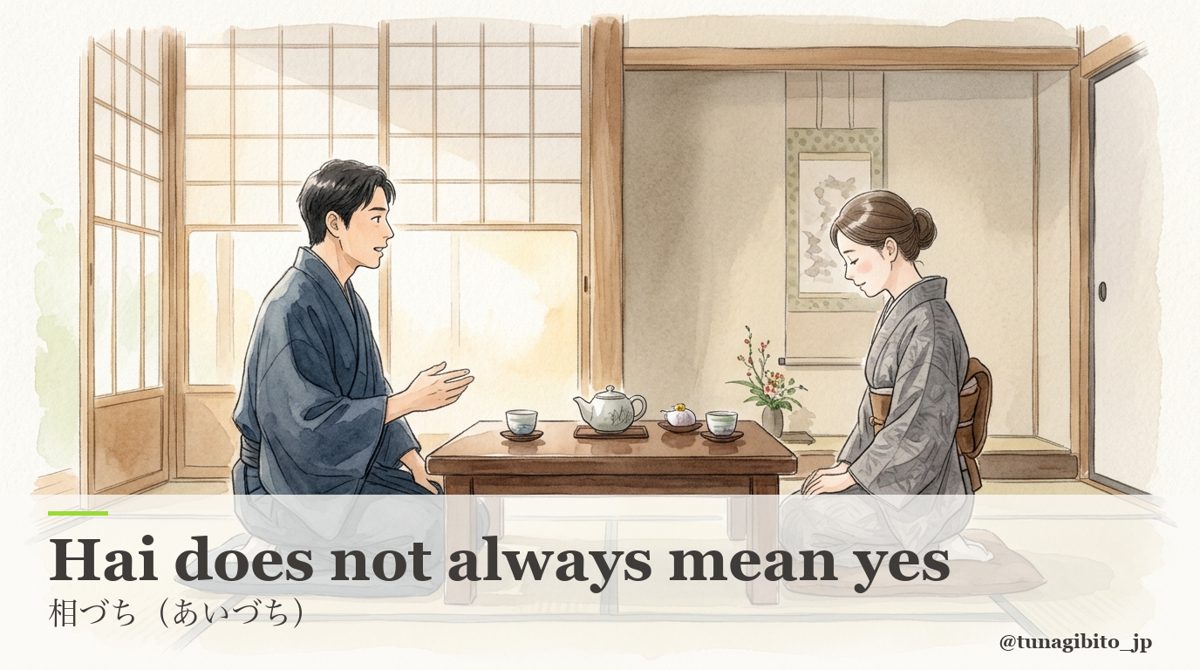
Visitors to Japan often notice that listeners keep saying "hai" or "un" while they talk.
Aizuchi (相づち) — "striking in turn." The word comes from blacksmithing, where a master and an apprentice hammer the iron one after the other, keeping time together.
These short sounds say, "I'm listening, I'm following." Without them, a listener can seem cold or bored. A listener may speak almost as much as the speaker.
This is also where confusion starts. "Hai" often means only "I hear you," not "I agree." At work, that gap can lead to real misunderstandings.
In Japan, many of us feel uneasy on the phone when the other side goes silent.
日本語訳
【日本の礼儀・習慣】相づち
日本を訪れた人は、話している間、聞き手が「はい」「うん」と何度も声を出すことによく気づきます。
相づち(aizuchi)——「交互に打つこと」。鍛冶の言葉から来ていて、師匠と弟子が交互に鉄を打ち、間を合わせる様子を指します。
この短い声は「聞いています、分かっています」と伝えます。相づちがないと、冷たい人、興味のない人に見えることがあります。聞き手が話し手と同じくらい声を出すこともあります。
行き違いが始まるのもここです。「はい」は「聞いています」の意味だけで、「賛成です」ではないことが多いのです。仕事の場では、この差が本当の誤解につながることがあります。
日本では、多くの人が、電話で相手が黙りこむと落ち着かなくなります。