
点字ブロック
Manners · 2026-10-27 · View on X
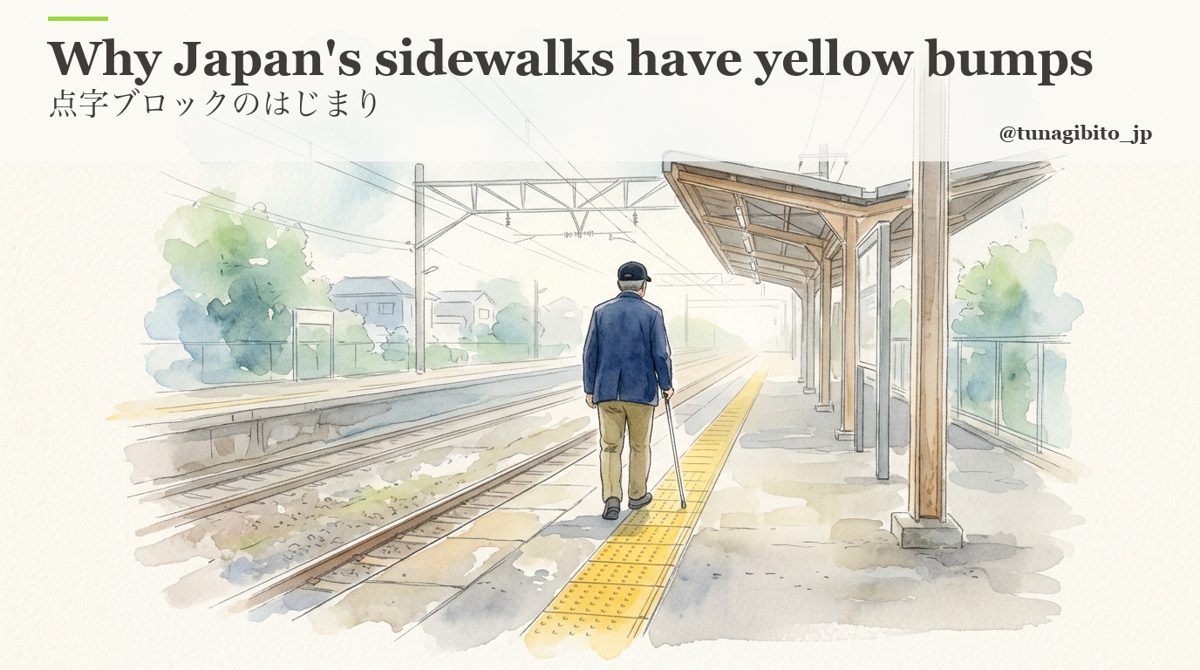
Visitors to Japan often notice a line of yellow, bumpy tiles along sidewalks and across station platforms. Many assume they are decoration.
Tenji burokku (点字ブロック) — tactile paving, literally "Braille blocks." They guide people who cannot see well, felt through the soles of the feet or the tip of a cane.
They were invented in 1965 by a man in Japan who wanted to help a friend whose eyesight was fading. The first ones were laid on March 18, 1967, near a school for the blind in Okayama. The idea later spread from Japan to the world.
In Japan, many of us walk over them every day and rarely think about who first imagined them. It began with one person thinking of one friend.
日本語訳
【日本の礼儀・習慣】点字ブロック
日本を訪れた人はよく、歩道や駅のホームに続く、黄色い凸凹のタイルに気づきます。飾りだと思う人も多いようです。
点字ブロック(tenji burokku)——足で感じる舗装で、文字どおり「点字のブロック」。目が見えにくい人を、足の裏や杖の先で感じ取れる形で導きます。
考案されたのは1965年。日本のある男性が、目が見えにくくなっていく友人を助けたいと思って作りました。最初に敷かれたのは1967年3月18日、岡山の盲学校の近くです。この考えは、のちに日本から世界へ広まりました。
日本では、多くの人が毎日その上を歩きながら、誰が最初に思いついたのかを考えることはほとんどありません。始まりは、ひとりの人が、ひとりの友人を思ったことでした。