
侘び寂び
Culture · 2026-10-28 · View on X
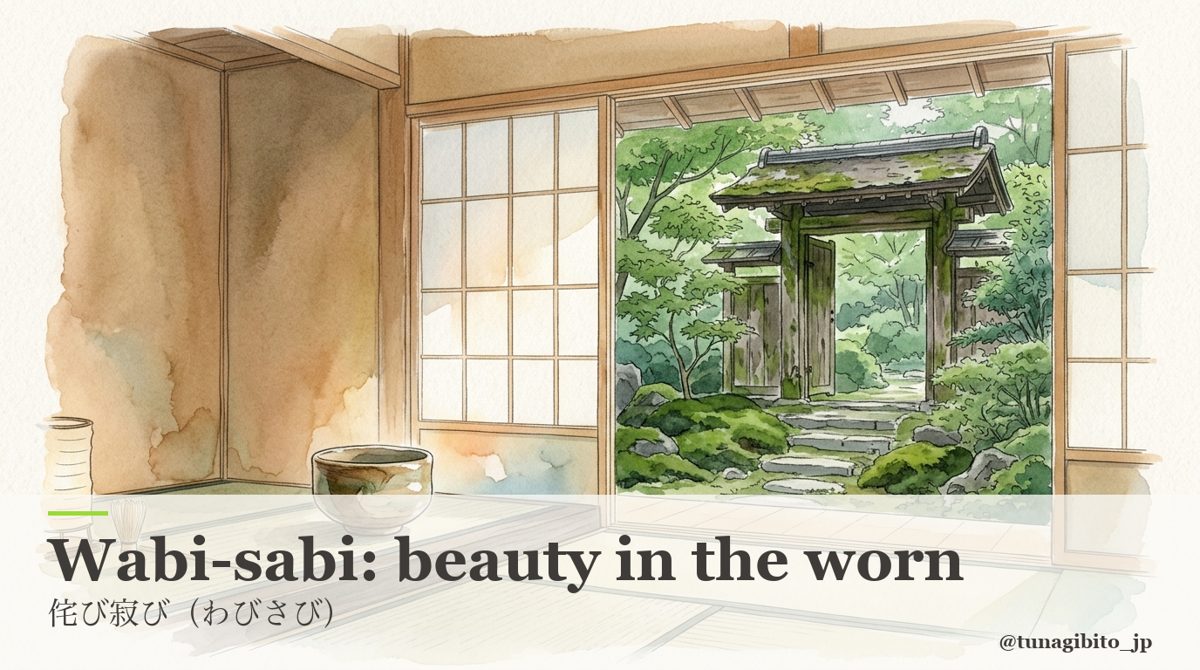
Visitors to Japan often notice that a weathered temple gate or a plain, uneven tea bowl is treated as something to admire.
Wabi-sabi (侘び寂び) — beauty found in what is simple, quiet, and aged. The two words were once separate.
From the medieval period on, wabi gradually came to mean a plain, quiet way of living. Sabi comes from sabiru, a verb meaning to grow old or to fade. Both were understood more deeply through the tea ceremony, and spread under the influence of Zen.
In Japan, many of us feel this before we can explain it. Something worn by time can look more at rest than something new.
日本語訳
【日本のことば】侘び寂び
日本を訪れた人はよく、風雨にさらされた寺の門や、素朴でいびつな茶碗が、愛でるべきものとして扱われていることに気づきます。
侘び寂び(wabi-sabi)——質素なもの、静かなもの、古びたものの中に見いだす美しさ。この二つの言葉は、もとは別々のものでした。
「侘び」は中世以降、しだいに「質素で静かな暮らし」を意味するようになりました。「寂び」は、古びる・色あせることを意味する動詞「さびる」から来ています。どちらも茶の湯を通して理解が深まり、禅の影響のもとで広まりました。
日本では、多くの人が、説明できるより先にこれを感じています。時を経たものは、新しいものより落ち着いて見えることがあります。