
風呂敷
Manners · 2026-10-28 · View on X
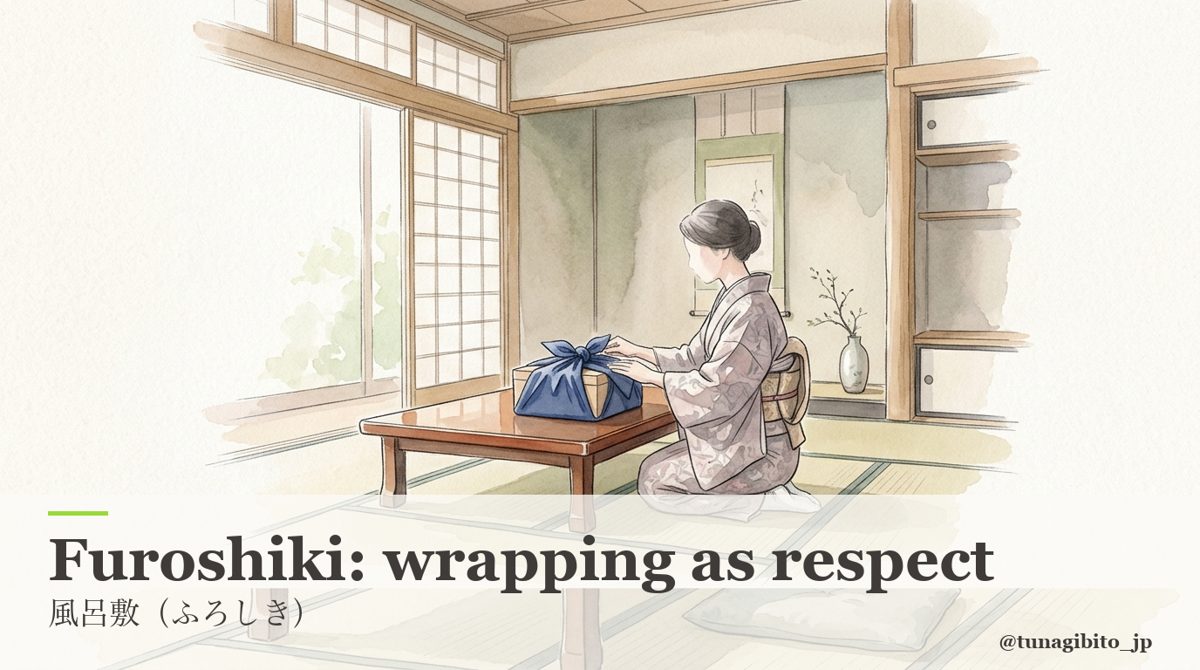
Visitors to Japan often notice how carefully things are wrapped, sometimes in cloth instead of paper.
Furoshiki (風呂敷) — a square cloth for wrapping and carrying things. Wrapping goods in cloth goes back to the Nara period (710 to 794), when such bundles were called tsutsumi.
At first, cloth protected precious items in temples. Later it was used for ceremonies and wedding gifts. Wrapping is seen as a way to show respect for the person receiving it.
In Japan, many of us feel a little uneasy handing over a gift unwrapped. The care travels inside the cloth, along with the gift.
日本語訳
【日本の礼儀・習慣】風呂敷
日本を訪れた人はよく、物がとても丁寧に包まれていること、ときには紙ではなく布で包まれていることに気づきます。
風呂敷(furoshiki)——物を包んで運ぶための、四角い布です。日本で物を布で包む習慣は奈良時代(710〜794年)にさかのぼり、当時、その包みは「つつみ」と呼ばれていました。
最初は、寺で大切な品を守るために布が使われました。のちに、儀式や結婚の贈り物にも使われるようになりました。包むことは、受け取る相手への敬意を表す方法とされています。
日本では、包まずに贈り物を渡すことに、少し落ち着かなさを感じる人が多くいます。心遣いは、贈り物と一緒に、布の中に包まれて届きます。