
ご祝儀 (goshugi)/水引 (mizuhiki)
Manners · 2026-11-01 · View on X
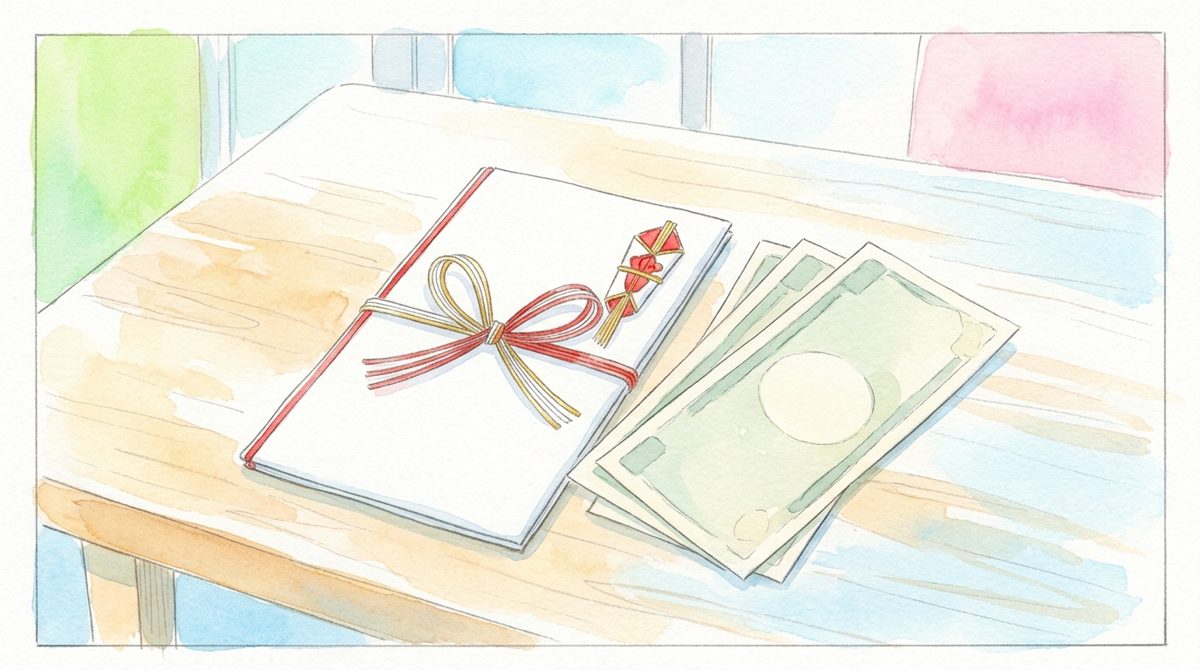
Visitors at a Japanese wedding are often surprised to see guests handing the couple cash in a decorated envelope.
Goshugi (ご祝儀) — a gift of money in celebration. The bills should be brand new, never used, with no folds or creases. Crisp notes carry a blessing for the couple's new life, and show that you prepared ahead of time.
The envelope is tied with mizuhiki, decorative cords, usually red and white or gold and silver. Your full name goes on the front, below the knot. For a funeral, it is the reverse. New bills are avoided, and the wrong cord color can turn a celebration into condolence.
In Japan, many of us check that cord color twice before we write our name.
日本語訳
【日本の礼儀・習慣】ご祝儀 (goshugi)/水引 (mizuhiki)
日本の結婚式を訪れた人は、招待客が飾りのついた封筒に入れた現金を新郎新婦に渡すのを見て驚くことがよくあります。
ご祝儀――お祝いとして贈るお金です。お札は使っていない新札で、折り目やしわのないものにします。ぴんとしたお札には二人の新しい暮らしへの祝福がこもり、前もって用意したことも伝わります。
封筒には水引という飾りの紐がかかり、色はふつう紅白か金銀。自分の氏名は表の、結び目の下に書きます。お葬式ではその逆で、新札は避けます。紐の色をまちがえると、お祝いがお悔やみに変わってしまいます。
日本では、名前を書く前に紐の色を二度確かめる人が少なくありません。