
給食 (kyushoku)/食育 (shokuiku)
Manners · 2026-11-07 · View on X
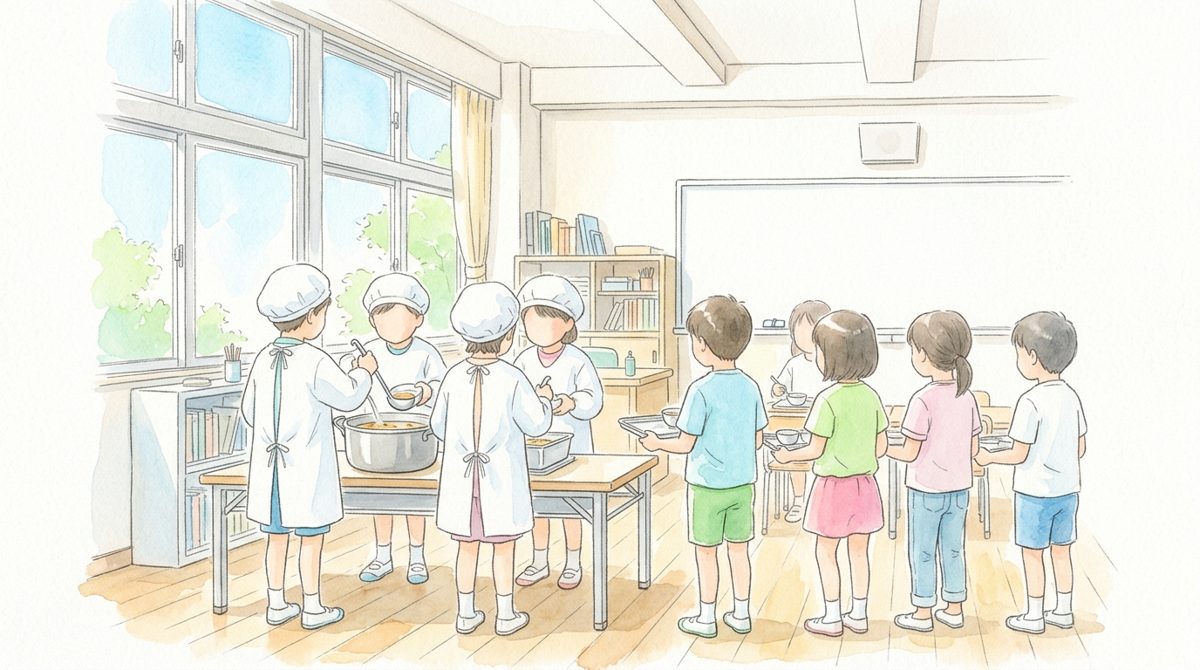
Visitors who pass a Japanese school at noon are sometimes surprised to see children in white coats and caps carrying big pots down the hallway.
Kyushoku (給食) — school lunch. There is no cafeteria. Students serve their classmates in the classroom, everyone eats together, and then they clean up. The duty rotates each week.
It began in 1889 at a school in Tsuruoka, Yamagata, for children who could not bring lunch. Today it is part of shokuiku, "food education," which a 2005 law called a basis for living.
In Japan, most of us grew up taking our turn behind the pot. In 2021, 99% of elementary schools still served it.
日本語訳
【日本の礼儀・習慣】給食 (kyushoku)/食育 (shokuiku)
昼どきに日本の学校の前を通りかかった人は、白衣と帽子の子どもたちが大きな鍋を運んで廊下を歩く姿に驚くことがあります。
給食(きゅうしょく)。学校の昼食のことです。食堂はありません。生徒が教室で同級生に配り、全員でいっしょに食べ、そのあと片づけます。当番は週ごとに入れ替わります。
始まりは1889年、山形県鶴岡の学校で、弁当を持ってこられない子どものために出されたものでした。今は「食育(しょくいく)」の一部とされ、2005年の法律は食育を生きる上での基本と定めています。
日本では、ほとんどの人が鍋の後ろに立つ当番を順に務めて育ちました。2021年には、小学校の99%が今も給食を出しています。