
すみません
Manners · 2026-11-11 · View on X
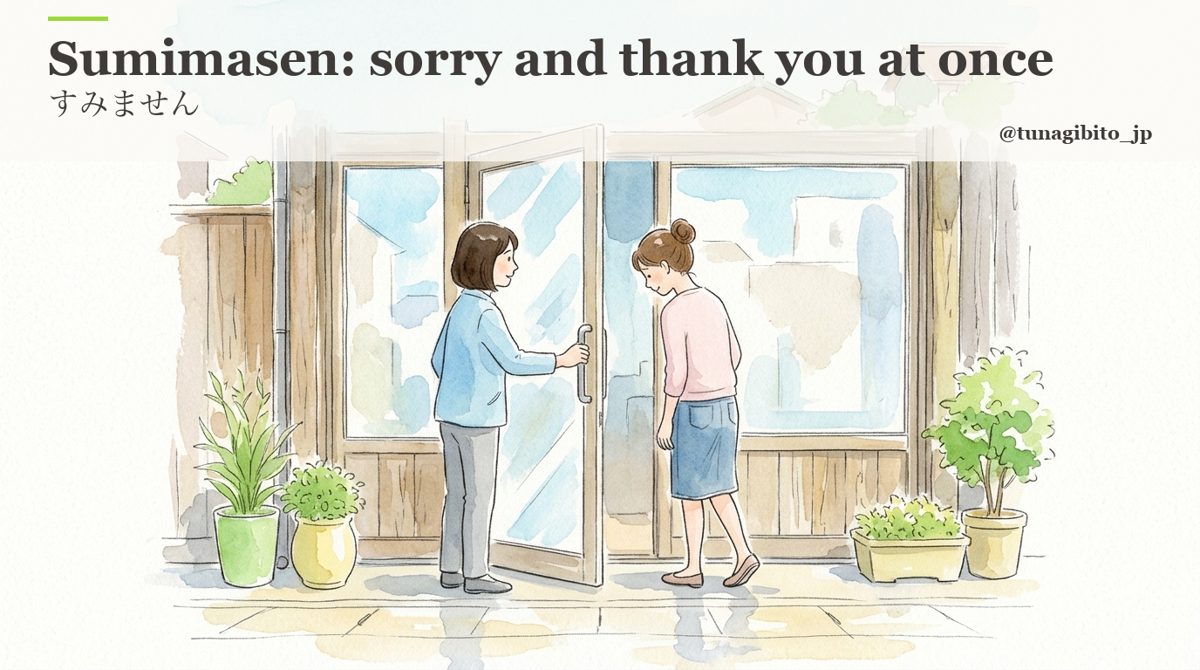
Visitors to Japan often notice something small at a doorway. Someone holds the door, and the person passing through says "sumimasen," usually translated as "sorry."
Sumimasen (すみません) — sorry, thank you, or excuse me, depending on the moment. Teachers of Japanese often explain it as one word with three uses.
At the door, it holds two feelings at once. "I'm sorry for the trouble," and "I'm grateful." Explanations link it to wa, or harmony, and to enryo, holding back for others. It softens the small burden you placed on someone.
It is also how you call a staff member in a shop. In Japan, many of us say it all day long, and the line between thanks and apology stays a little blurry.
日本語訳
【日本の礼儀・習慣】すみません
日本を訪れた人は、ドアの前で小さなことに気づきます。誰かがドアを押さえてくれると、通る人は「すみません」と言います。ふつう「ごめんなさい」と訳される言葉です。
すみません(sumimasen)。場面によって「ごめんなさい」にも「ありがとう」にも「ちょっと失礼します」にもなります。日本語を教える人は、1つの言葉に3つの使い方がある、とよく説明します。
ドアの前では、2つの気持ちが一度に入っています。「手間をかけさせて申し訳ない」と「ありがたい」です。解説では、和(調和)や遠慮(相手のために控えること)と結びつけて説明されます。相手にかけた小さな負担を、やわらげる言葉です。
お店で店員さんを呼ぶときも、同じ言葉です。日本では多くの人が一日中この言葉を口にしていて、お礼とお詫びの境目は少しあいまいなままです。