
お先に失礼します (osaki ni shitsurei shimasu)
Manners · 2026-11-16 · View on X
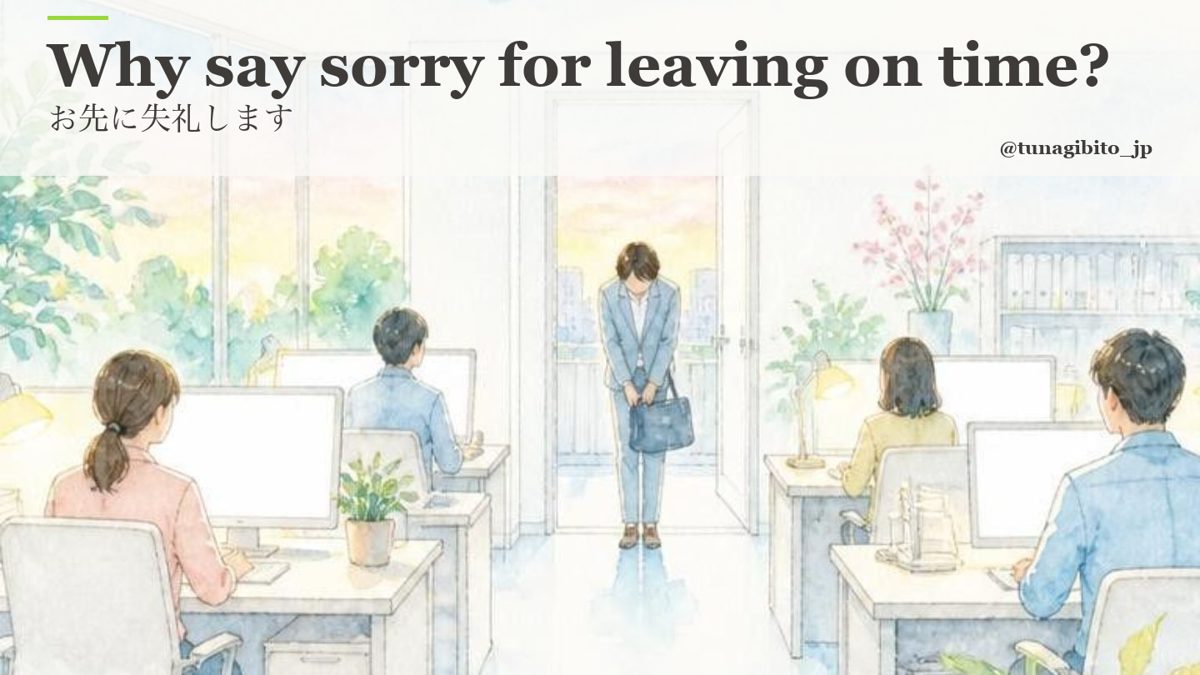
Visitors working in Japanese offices notice a small ritual at day's end. Someone leaving on time stands, bows slightly, and speaks to the room.
Osaki ni shitsurei shimasu (お先に失礼します) — "excuse me for leaving first." Osaki means "ahead of others," and shitsurei shimasu means "I am being rude."
It tells colleagues you are going, with respect for the work they are still doing. The usual reply is otsukaresama deshita, "thank you for your hard work."
Japanese news sites have asked whether the phrase makes leaving feel like an apology, keeping people at their desks.
I spent 37 years in Japanese companies. Many of us said those words most evenings, and heard the reply before the door closed.
日本語訳
【日本の礼儀・習慣】お先に失礼します (osaki ni shitsurei shimasu)
日本の会社で働く外国の人は、一日の終わりの小さな決まりごとに気づきます。定時に帰る人が立ち上がり、軽く頭を下げて、部屋に向かって声をかけるのです。
お先に失礼します(Osaki ni shitsurei shimasu)――「先に帰ってすみません」。「お先に」は「ほかの人より先に」、「失礼します」は「無礼をします」という意味です。
自分が帰ることを同僚に伝え、まだ続いている仕事への敬意を示す言葉です。返す言葉は「お疲れ様でした」が一般的です。
日本のニュースサイトは、この言葉が、帰ることを謝ることのように感じさせ、人を机に引き留めているのでは、という問いを取り上げています。
私は37年間、日本の会社で働きました。多くの人が、ほとんど毎晩この言葉を口にし、ドアが閉まる前に返事を聞いてきました。